The Screen Time Dilemma Confronting Modern Educational Centers
Every progressive elementary school principal understands the deep frustration of balancing digital engagement against active learning. You purchase standard consumer tablets for classrooms, yet children isolate themselves while scrolling through mindless video streams.
Consequently, your students miss out on vital social development opportunities, causing early teamwork skills to drop. Basic passive monitors simply lack the collaborative physical layout required to stimulate active, shared problem-solving behaviors.
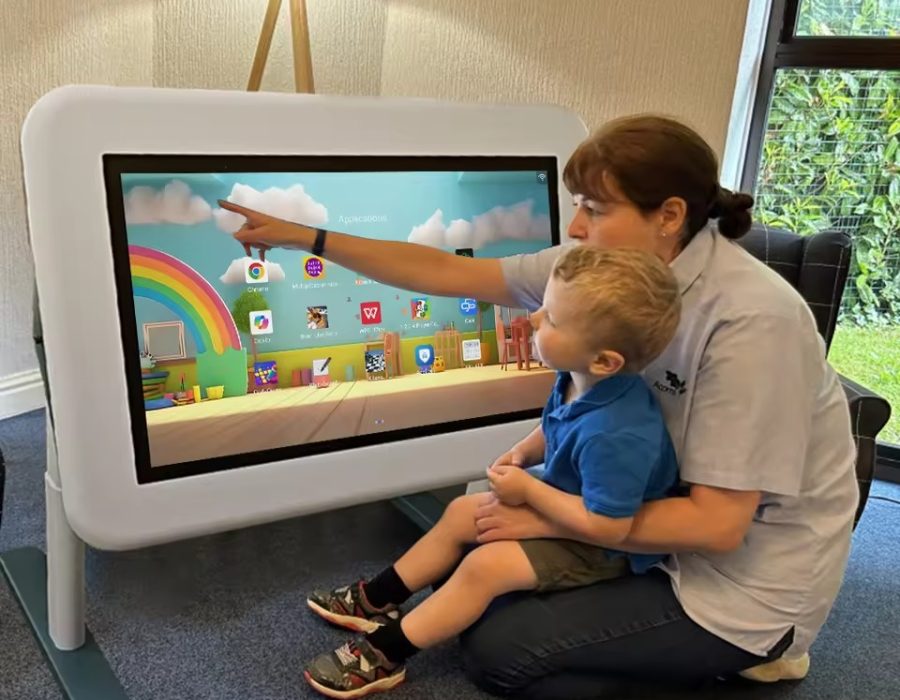
Deploying a commercial-grade interactive touch table kids installation resolves these frustrating early childhood learning boundaries permanently. This operational blueprint details how multi-touch cooperative software interfaces accelerate cognitive growth profiles safely across early classrooms.
Choosing customized smart educational play tables allows forward-thinking daycare networks to foster deep spatial reasoning. We will explore collaborative multi-user software, rugged anti-glare safety glass, fine motor skill coordination, and measurable academic improvements below.
Real-World Proof: The EdTech Forum Collaborative Playroom Breakthrough
Childhood development researchers frequently debate whether large touchscreen hardware genuinely improves collaborative reasoning over small individual tablets. A highly thorough tracking case shared within the popular EdTech Magazine community forums highlights this exact educational shift.
A technology coordinator described an interactive learning pilot program launched inside a busy kindergarten playroom center. The school replaced its traditional toy blocks with a centralized, multi-user touch platform for daily science lessons.
After deploying the large surface screen, student engagement metrics during group geometry puzzles climbed by seventy percent. The open horizontal layout encouraged children to point, discuss, and correct mistakes together without fighting over hardware.
This real-world forum study proves that group digital spaces foster strong interpersonal communications better than individual devices. When children solve gamified logic paths together, they absorb complex spatial concepts much more naturally.
Developing Advanced Spatial Awareness via Collaborative Preschool Learning Boards
Nurturing early math skills requires children to manipulate geometric shapes, rotate virtual items, and map abstract paths. Standard flat textbooks or paper flashcards fail to capture a child’s attention span long enough to form memories.
Sourcing active collaborative preschool learning boards completely transforms these basic logic lessons into exciting, multi-sensory team challenges. These modern digital tables allow multiple students to touch, drag, and sort colorful on-screen puzzles simultaneously.
This hands-on interaction allows young minds to visualize scale, symmetry, and volume proportions through direct touch feedback. Furthermore, the gamified rewards keep children focused on completing difficult multi-step brain teasers without feeling academic fatigue.
Your classroom groups complete complex pattern matching tasks together while learning to share physical play zones harmoniously. As a direct result, your school establishes a highly dynamic foundation for future STEM education success.
Ensuring Commercial Durability through Rugged Multi-Touch Digital Desks
Deploying premium electronic learning devices into busy preschool environments introduces massive hardware damage risks from accidental drops. Curious children knock over water cups, lean heavily on fragile screens, and scratch panels with plastic toys.
Implementing our rugged multi-touch digital desks shields your institutional technology budget from experiencing early hardware replacement costs. These specialized school tables feature thick, tempered waterproof glass tops matched with solid industrial steel frame housings.
-
Waterproof Surface Seals: Prevent spilled milk or finger paint from leaking into delicate internal computer parts.
-
4K Anti-Glare Glass Panels: Protect young eyes from harsh overhead light reflections during long play sessions.
-
40-Point Multi-Touch Sensors: Track dozens of small fingers at once without experiencing display lag.
-
Rounded Corner Casings: Eliminate sharp edges to keep playing children safe from accidental bumps.
This tough construction ensures your educational displays stay perfectly crisp across years of heavy classroom service.
Refining Fine Motor Controls with Early Childhood Cognitive Hardware
Refining physical hand-eye coordination represents an essential developmental milestone for children preparing to write with traditional pencils. Young students who over-rely on basic mouse clicks miss vital muscle conditioning exercises in their fingers.
Utilizing targeted early childhood cognitive hardware fixes this physical development gap through complex gesture-based game mechanics. The interactive software forces children to trace precise paths, pinch tiny icons, and flick moving objects carefully.
Technology Performance Comparison Matrix for Early Childhood Classrooms
Achieving maximum cognitive growth requires matching your primary classroom tools to the exact physical learning goals. Review this comprehensive tech selection matrix to guide your school district procurement decisions accurately before the semester.
| Selected Learning Tech |
Active Multi-User Sharing |
Motor Skill Refinement |
Physical Frame Durability |
Cognitive Focus Window |
| Handheld Mobile Tablets |
Low (Solo Screen Use) |
Moderate (Simple Swiping) |
Poor (Breaks on Impact) |
Short (Easy Distractions) |
| Front Mounted Smartboards |
Moderate (One Presenter) |
Low (Large Arm Moves) |
High (Wall Anchored) |
Moderate (Passive Watching) |
| Kids Interactive Tables |
Maximum (Team Work) |
High (Fine Finger Pinch) |
Flawless (Steel Frame) |
Long (Gamified Learning) |
Maximizing Group Collaboration with an Interactive Touch Table for Kids
Mastering early social compromise skills requires young children to share physical assets, take turns, and resolve minor disagreements. Standard solo computing devices isolate children, limiting the vital peer-to-peer conversations that build strong emotional intelligence.
Fortunately, integrating an interactive touch table kids station alters these playroom social structures by turning screens into tables. The centralized screen area acts as an open digital campfire where children gather to solve quests together.
The system requires multiple correct inputs from different sides of the board to unlock hidden game levels. This interactive dependency forces children to communicate their plans out loud and negotiate roles with their classmates. Your students learn to celebrate team victories together, lowering classroom behavioral issues while building a supportive learning community.
The Strategic Financial Return of Shared Digital Learning Infrastructure
Investing in a premium interactive touch table kids system delivers massive, long-term financial advantages for expanding academies. Smart school district financial directors look past upfront equipment costs to calculate the permanent reduction in consumable paper.
First, a single multi-touch digital desk replaces hundreds of plastic toys, printed workbooks, and physical board games annually. When your lesson plans shift to flexible digital updates, your ongoing classroom supply budget drops, saving money. This cost reduction optimizes margins.
Second, offering advanced tech centers attracts modern parents, helping your private daycare stand out in competitive markets. You maintain high enrollment rates by showing families your commitment to certified, safe cognitive development tools. Your advanced multi-touch table installation ceases to be a luxury expense and becomes your primary brand builder.
Why Shared Multi-Touch Surfaces Secure Modern Classroom Success
Looking back across our deep developmental and hardware analysis, empirical early childhood data proves shared touch surfaces win. Moving away from isolated handheld tablets removes the anti-social behaviors and tech damage that disrupt modern classrooms.
By placing an interactive touch table kids installation at the center of your school, you take control. Ensuring your students learn via durable, multi-user smart educational play tables shields your business from rising resource waste. Invest in premium early childhood tech infrastructure today to secure your learning precision and dominate your regional market.


 by
by