The Bottom Line: Yes, It Changes Everything
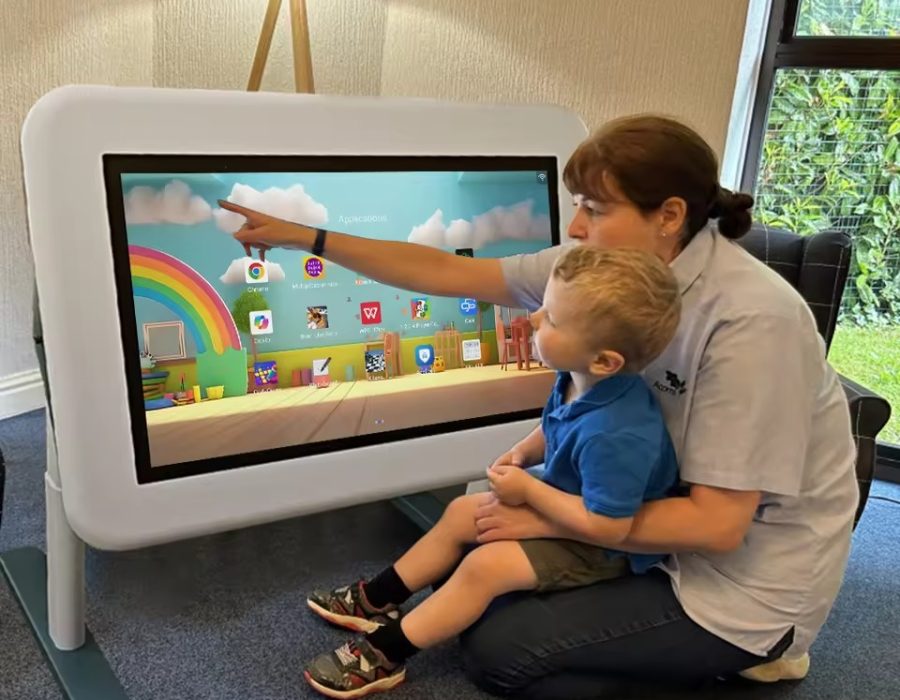
Executive Summary: Collaborative technology fundamentally upgrades how children learn. A touch table multi touchscreen directly improves both creativity and problem-solving skills. It shifts kids from passive screen viewers to active, collaborative creators.
While traditional tablets isolate users, interactive smart tables force children to talk, negotiate, and build solutions together. Read on to see the real-world evidence and classroom strategies behind this powerful educational shift.
Why Collaborative Touch Screens Deliver Real Results
Most parents worry about screen time. However, the type of engagement matters more than the minutes spent. Static screens limit growth. Conversely, a large interactive smart table sparks dynamic group exploration.
Active Learning vs. Passive Scrolling
Passive consumption dulls the mind. Active learning, on the other hand, builds neural pathways. When children use a touch table multi touchscreen, they manipulate virtual objects physically. This physical-digital link aids spatial awareness. Consequently, abstract concepts become tangible.
The Power of Social Co-Regulation
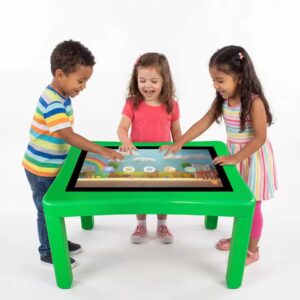
Isolation stalls emotional growth. In contrast, multi-touch surfaces naturally gather groups. Children must share the workspace. Therefore, they learn to self-regulate, listen, and take turns. This social interaction directly fuels advanced children creativity tech practices.
Deep Dive: Boosting Creativity Through Digital Play
How exactly does a horizontal smart screen unlock imagination? The secret lies in open-ended software.
-
Infinite Canvases: Kids draw without physical limits.
-
Dynamic Asset Mixing: They combine photos, 3D shapes, and music instantly.
-
Zero-Risk Trial: Undo buttons encourage bold, fearless artistic choices.
When children create without fear of making permanent mistakes, their creative confidence skyrockets. Furthermore, they build complex digital worlds together. This collective brainstorming rarely happens on tiny, individual smartphones.
Mechanics of Problem-Solving on Multi-Touch Surfaces
Problem-solving is not just an innate talent. Rather, it is a muscle developed through practice. Interactive tables serve as digital fitness centers for the brain.
Real-Time Collaborative Debugging
Imagine four kids solving a digital physics puzzle. One adjusts gravity. Another changes the slope. Simultaneously, two others build blocks. They see results instantly. If the ball drops, they discuss why. This immediate feedback loop teaches rapid iteration. As a result, they learn how to improve kids problem-solving skills through teamwork.
Embracing Friction and Negotiation
Conflict happens naturally during group play. Someone blocks a path. Another deletes a shared asset. However, these moments are teachable. Children must communicate to succeed. They negotiate roles. Thus, digital friction transforms into real-world social competence.
Choosing the Right Multi-Touch Table for Classrooms
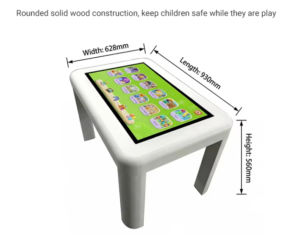
Not all hardware yields the same educational value. You must select features carefully.
| Key Feature |
Educational Impact |
Why It Matters |
| ≥20 Touch Points |
True collaboration |
Allows four or more kids to work simultaneously. |
| Palm Rejection |
Frustration-free typing |
Prevents accidental inputs from leaning elbows. |
| Ruggedized Glass |
Long-term durability |
Resists spills, heavy drops, and rough classroom use. |
Best Practices for Educators and Parents
Buying the hardware is only the first step. You must guide the experience properly.
Set Open-Ended Challenges
Avoid rigid, linear apps. Instead, choose software with multiple solutions. For example, ask kids to design a sustainable city. Let them experiment freely.
Assign Specific Group Roles
To ensure equal participation, give every child a clear job.
-
The Architect: Directs the overall design.
-
The Asset Manager: Selects the digital tools.
-
The Tester: Evaluates the solutions.
Rotations keep everyone engaged. Consequently, no single child dominates the screen.
The Future of Early Childhood Education
Education is shifting away from rote memorization. Modern employers value soft skills. Specifically, they want creativity, adaptability, and teamwork. A multi-touch table for classroom environments prepares kids for this future. It mirrors modern workspace collaboration.
Ultimately, technology is just a tool. But the right tool makes hard concepts fun. By blending physical movement with digital agility, we prepare children for tomorrow.
FAQ:
Will this cause eye strain in younger children?
High-quality panels include anti-glare filters. Additionally, users look downward, reducing direct eye fatigue compared to vertical monitors.
What age group benefits most from touch tables?
Children aged 3 to 12 show the highest gains. During this window, tactile exploration heavily drives cognitive development.
Can these tables replace traditional tactile toys?
No. They should complement blocks and clay. Balancing physical and digital play yields the best cognitive results.


 by
by